Artist Profile
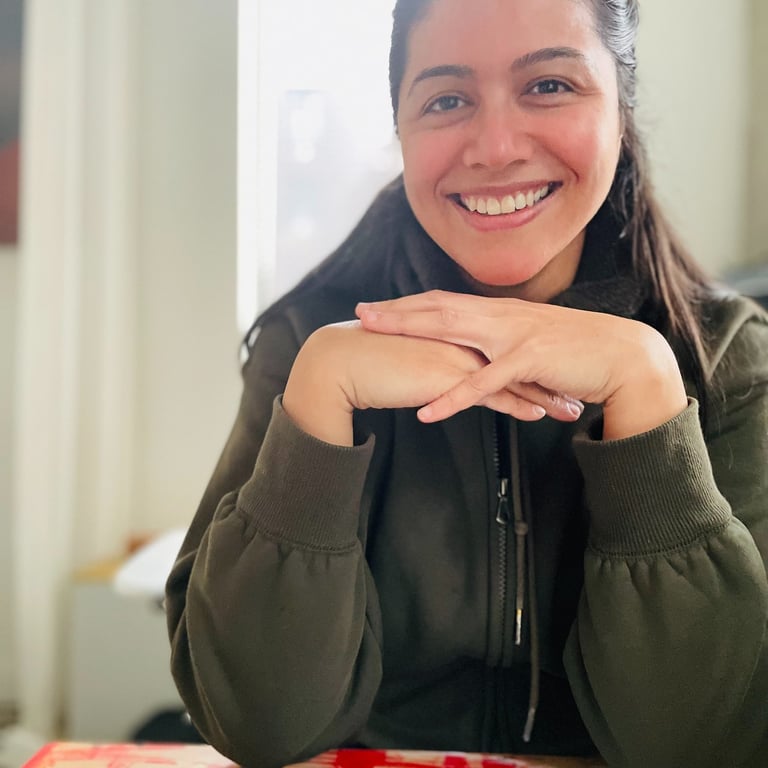
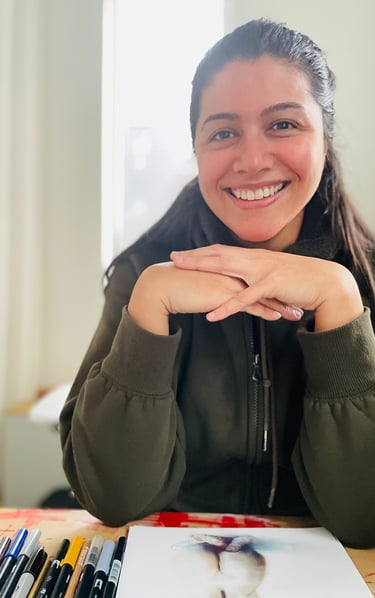
Kannaki, a figurative artist, was born in Assam, India, and currently resides in Brooklyn. She discovered the world of art at a young age, but her time in the fashion design school led her to diverse experiences and opportunities with life drawing. For her, drawing the figure and portraits have been something that she has always loved. Her first book, Fashion Rendering, published in 2011, was about rendering techniques. This book provides quick and simple rendering techniques and serves as a guide for making accurate, professional, unique illustrations using locally available color mediums in the market. She holds a Ph.D. degree in Sociology from The Graduate Center, CUNY, New York. Her dissertation explored the complexities of identity management, social bonding, and the social image of art models.
Artist Statement
Kannaki’s work reflects a strong figurative sensibility combined with ethereal textural blending techniques, merging realistic interpretations of the human body and portraiture with emotional depth and movement. Her practice explores the space between the appearance and disapperance, using layered textures and negative space to create compositions that feel both intimate and elusive. To achieve this effect, she employs soft shading that allows the figures and portraits to gradually dissolve into the canvas, contrasting with the heavy, tactile application of acrylic gel medium. The interplay between delicate transitions and richly textured surfaces gives her work a dreamlike yet grounded presence.
She draws on Georgia O’Keeffe’s simplified compositions, dramatic cropping, and use of negative space to create dreamlike, ethereal paintings in which the figure gradually dissolves into its surroundings. Influenced by Egon Schiele’s asymmetry, muted palettes, and expressive textures, she uses soft shading, layered surfaces, and subtle tension to evoke emotion and impermanence. Through these influences, she creates figurative works that feel atmospheric, delicate, and caught between presence and disappearance. Using negative space, soft dissolving forms, and layered acrylic textures, her paintings explore themes of identity, emotion, memory, and transformation.